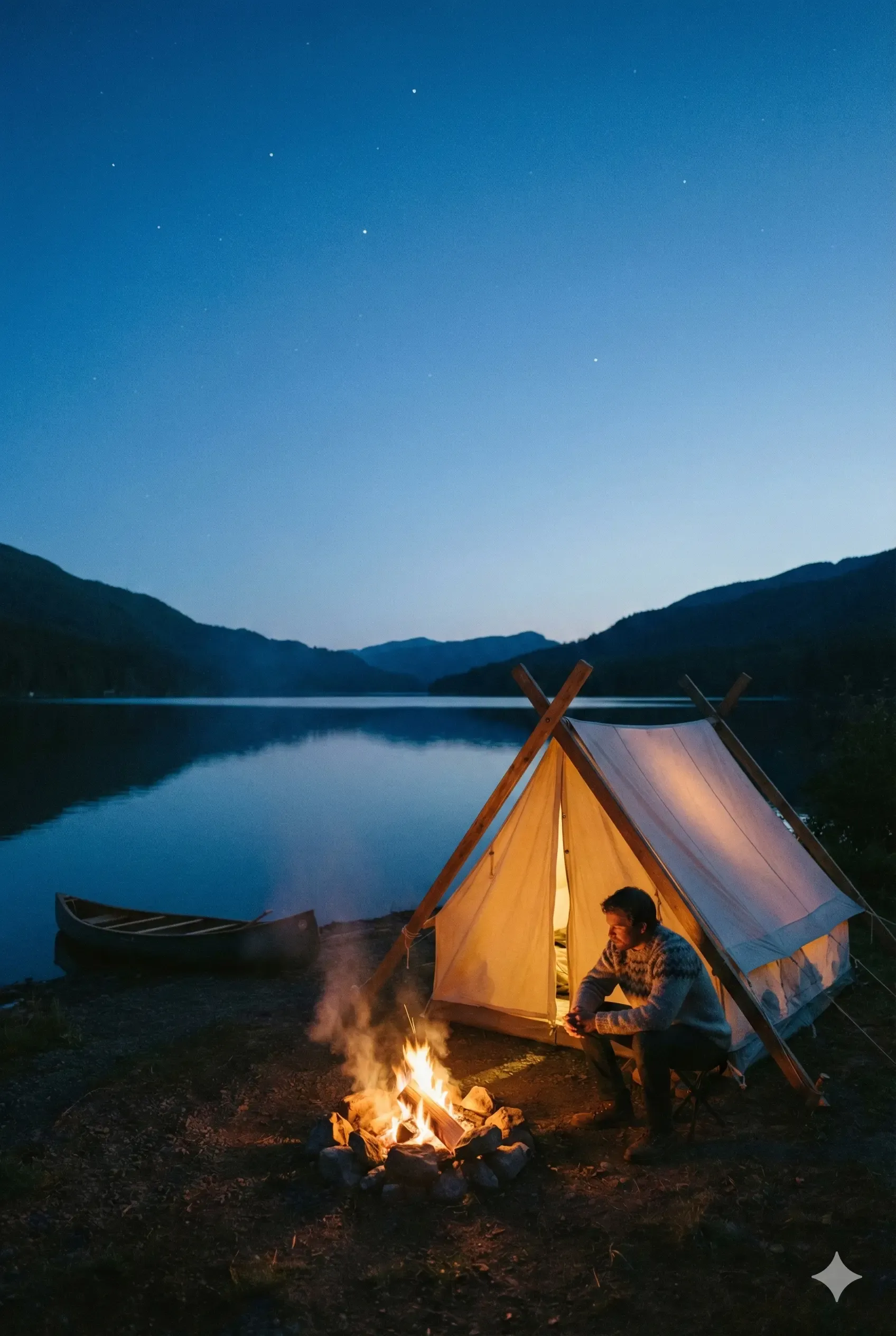
Hitchhiking& Camping
The oldest and cheapest form of travel. Done right it is safe, done wrong it is gambling; the difference is knowing the rules.
The Unwritten Rules of Hitchhiking
Spot choice is everything
A place where the car can see you and stop safely: gas station exits, the first pull-in at the city exit, right after toll booths. Standing on the highway's main lane is illegal in most countries and dangerous everywhere.
Sign + appearance
Write the direction/city in big letters on cardboard; a smile plus tidy clothes seriously shortens your wait. Make eye contact; the driver reads "who you are" in 3 seconds.
The in-car protocol
Before getting in, photograph the plate and send it with your location to someone close; keep your bag on your lap/next to you. If it does not feel right, do not get in; there is always the next car.
Exit line ready
If you get uncomfortable: "I'll get off right here, thanks." Gas stations are safe drop-off points; get out without arguing.
Legality varies by country
In Germany/France it is banned on the highway itself (gas stations are fine), the Netherlands even has marked hitchhiking spots; in some countries it is generally restricted. Check the country's road rules before going; for safety advisories, check the travel advice published by your own foreign ministry.
Wild Camping: Where Is It Free, Where Is It a Crime?
Scandinavia's "everyone's right" (allemansrätten) tradition is the gold standard of free camping in nature (Sweden, Norway, Finland, provided you keep away from homes). Scotland is similarly free. In contrast, in most of Central and Southern Europe unpermitted wild camping is subject to fines; in Turkey, national park and private land rules are what decide.
Minimal gear
A 3-season tent (≤2 kg), a sleeping bag with the right comfort rating, a mat, a headlamp, stove + cartridge, a knife, first aid. Above 6-8 kg total it is not "camping", it is hauling.
Weather beats every plan
The afternoon storm in the mountains is a classic; do not pitch the tent without checking Windy's wind/rain layer.
Hitchhiking Culture From Country to Country
The Caucasus & Balkans: paradise
Georgia, Armenia, Albania, Bosnia: hitchhiking is both common and interwoven with hospitality. Finding a car rarely takes more than 10 minutes; be ready for tea/dinner invitations.
Germany & Central Europe: the gas station tactic
Raising a thumb on the autobahn is banned and useless; the right method is politely talking to drivers at the Raststätte (rest stop). Long distances get covered in a single car.
Scandinavia: hard but safe
The stopping rate is low and waits are long; but the profile of drivers who stop is trustworthy. Set aside a FlixBus/local bus budget as plan B.
Resources: Hitchwiki & iOverlander
hitchwiki.org shows the best hitchhiking spots city by city, iOverlander shows free camping and water points. Both are gold data the traveler community has refined for years.
The minimal camping kit (flight friendly)
A 1.5-2 kg tent or tarp, a sleeping bag matching your route's comfort rating (+5°C comfort is enough for summer Europe), an inflatable mat, a headlamp, a 10,000 mAh powerbank. Gas cartridges cannot board a plane; buy one at an outdoor store in the destination country, finish it before returning or gift it to fellow campers.
Frequently Asked Questions
Many travelers do; but the risk assessment is personal. General rules: no hitchhiking at night, send the plate photo to a loved one before getting in, do not get in if it does not feel right; saying "I'm waiting for another ride" is always your right. Read country-based experiences of women in communities like Travel Ladies.
iOverlander and Organic Maps show fountains/water sources; still carry 2-3 liters a day. Shopping at a market while passing through a settlement and spending the evening in the wild is the standard that is both cheap and safe.
Statistically safer than assumed, but conditional: the right spot, plate sharing, respect for instinct and avoiding night hitchhiking. Solo female travelers mostly prefer doing it in pairs or with a daytime-only rule.
The rule is rarely national: it is usually set park by park, region by region or by land type. Look up the specific national park or municipality rather than the country, and assume private land needs permission and that fire rules in forest areas are strict. Marked campsites are always the trouble-free option.
Knives, cartridges (gas) and matches hit the checked/cabin rules: a gas cartridge cannot travel in any luggage; it is bought at the destination. The knife goes only in checked luggage.
Sources and Useful Addresses
- • The countries' official tourism/forestry authority pages, camping rules
- • Your own foreign ministry's safety advisories
- • Airline dangerous goods rules (gas cartridge, knife)
Important: this content is general information
Visa rules can change without notice. Always confirm your situation with an official source before you travel: Also check with the embassy or consulate of your destination country in your own country. The information on this page is guidance, not legal advice.
Time to draw the route
The hitchhiking paradise of the Balkans and the Caucasus is visa-free; see it on the map.
See Visa-Free Countries